
Dermatology · 2026
What a dermatology practice gets, built end to end
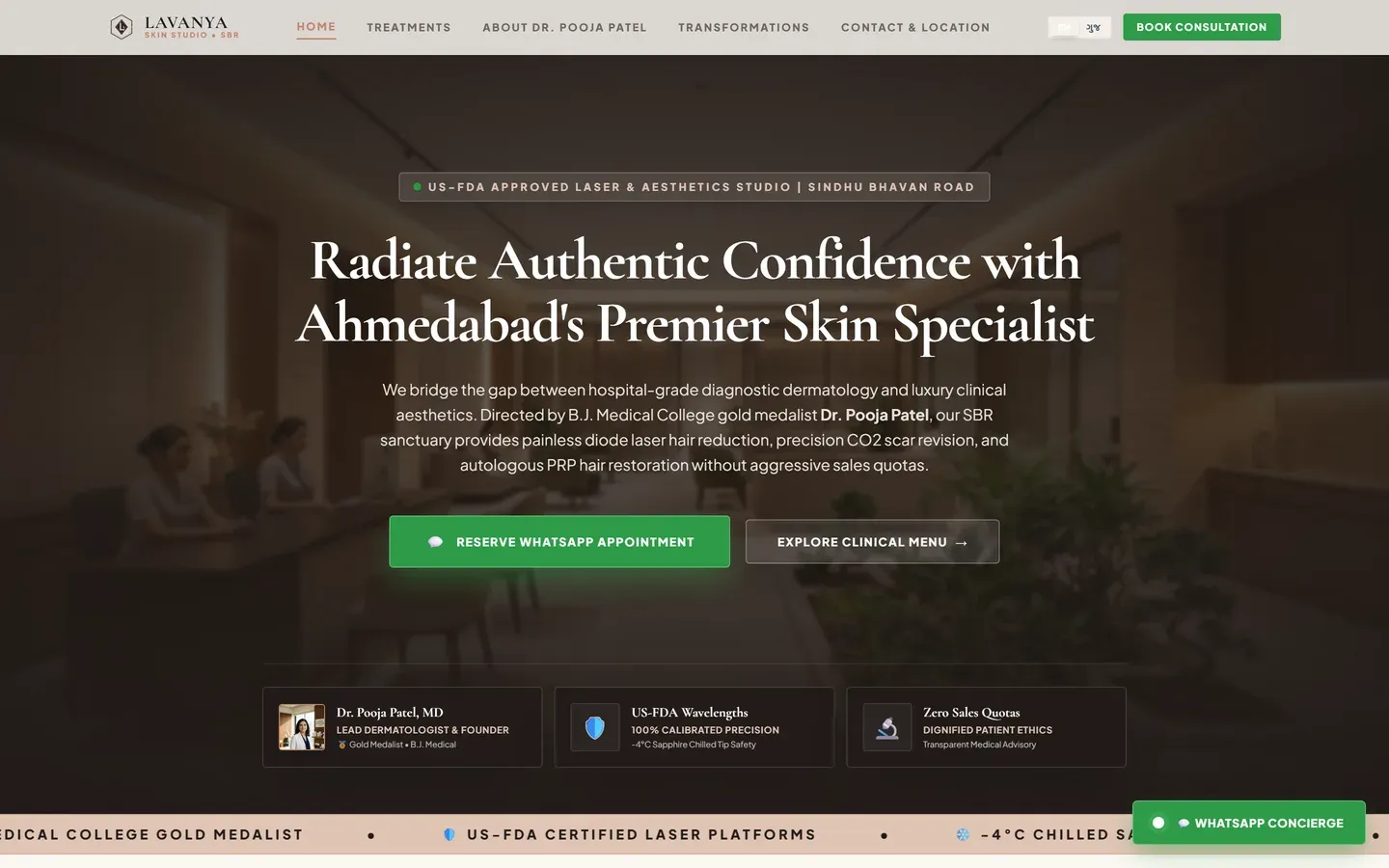
A complete dermatology website, designed and built from nothing and put online so you can open it instead of reading about it. The practice is invented and so is every number on it, which is the first thing its page tells you.
Lavanya Skin Studio · A sample practice, written as Ahmedabad
A sample site. The practice, the doctor and every number in it are invented.
- Type of build, no client behind it
- Sample
- Type of build, no client behind it
- Pages, laser, PRP, resurfacing
- One per treatment
- Pages, laser, PRP, resurfacing
- Enquiry, from every section
- Enquiry, from every section
- Languages, switcher in the header
- EN + GU
- Languages, switcher in the header
Before the build
The problem with describing a website
A practice deciding who to hire is asked to judge work it cannot see. Screenshots flatter, mockups hide how a page behaves under a thumb, and a portfolio of two projects cannot show what a dermatology clinic in particular would get. So we built one: a full site, deployed, openable on your own phone. What it demonstrates is the design and the build. What it deliberately does not demonstrate is the writing, and the case study below is direct about why.
This is a sample. Nothing written in it is true.
There is no Lavanya Skin Studio. There is no Dr. Pooja Patel, and nobody connected to this site is a gold medalist from B.J. Medical College. The address is a real building with an invented clinic inside it. The four figures on the homepage under the heading “audit metric” — the session count, the satisfaction percentage, the years without an incident — are numbers we made up to fill four boxes.
We are saying this first, and plainly, because the rest of our site argues that a practice should never publish a claim it cannot support, and it would be worth very little if we quietly made an exception for our own portfolio.
So what is it for?
The design and the build. Open it on your phone and judge the things that survive having invented words in them: how fast it opens, how the layout holds at the size you are actually reading, whether the booking button is ever more than a thumb away, how a treatment page is structured, how the language switcher behaves.
Those are the parts we are showing you, and they are the parts that transfer to your practice unchanged. A real build starts from your treatments, your city and your patients, and the words are written with you in week two before any of this visual work begins.
What we would change for a real clinic
If a dermatology practice hired us tomorrow, the copy on this sample would not survive the first review, and it is worth being specific about why.
The regulatory claims would go. “US-FDA approved” appears across the sample, and the US Food and Drug Administration does not certify clinics in Gujarat. “Ahmedabad’s premier skin specialist” is a superiority claim of exactly the kind that India’s medical advertising rules exist to restrict. Neither belongs on a page with a real doctor’s name on it.
The invented numbers would go. A number presented as an audited measurement has to be an audited measurement. If a practice has genuinely completed twelve thousand sessions, we will publish that and say where the figure came from. If it has not, the page is stronger without a number at all.
The language would come down several floors. The sample says “pro-growth cytokinetic stimulation” where it means PRP might help thinning hair, and “collagen architectural matrix modeling” where it means the skin repairs itself afterwards. That reads as expertise to the person who wrote it and as noise to a patient deciding whether to book. Our writing is plain by policy: symptom first, cost second, procedure name last, because that is the order a worried person thinks in.
Which is the honest summary of this whole page. The sample shows what we can build. What we would actually write for you is on the rest of this site.
Why publish it at all
Because a practice owner comparing three studios can open this on their own phone, at their own network speed, at eleven at night, and form a first-hand opinion in under a minute. That is worth more than any description we could write, and more than a slide of flattering screenshots.
The real work is on the Pramukh Dental case study, where the clinic, the treatments and the results are all genuine. Read that one for what we do. Open this one for what it looks like when it is finished.
Inside the build
Three decisions, and what they look like
Every screenshot below is the deployed sample, not a drawing of one. The note beside each is the decision it shows, and each of those decisions carries over to a real build.
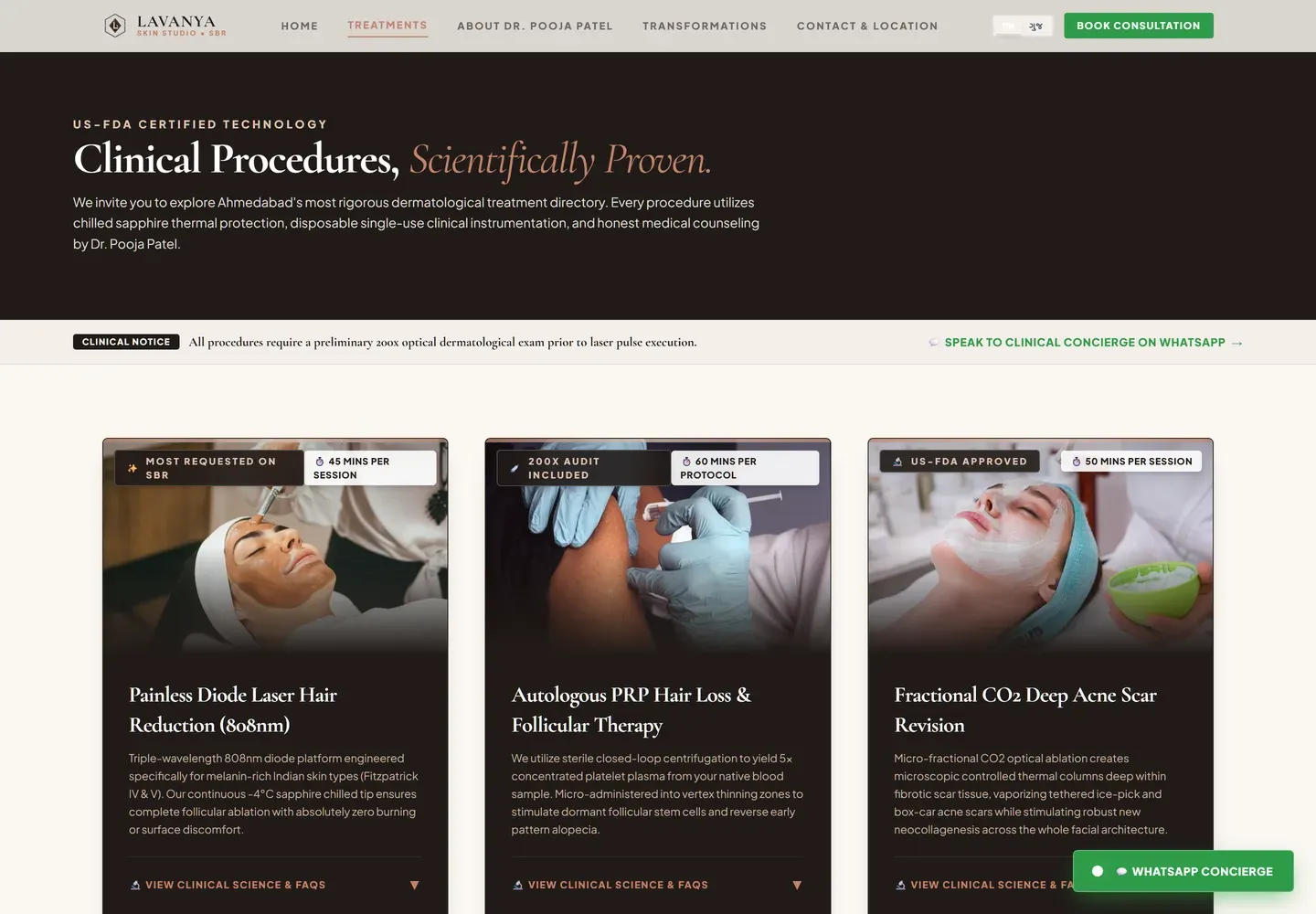
A page for the treatment, not a list of them
Every procedure gets its own card and its own detail, with the session length answered before a patient has to ask. The expandable FAQ under each one holds the questions that otherwise arrive by phone. This is the structure a dermatology practice needs, and it is the part of this sample that transfers to a real build unchanged.
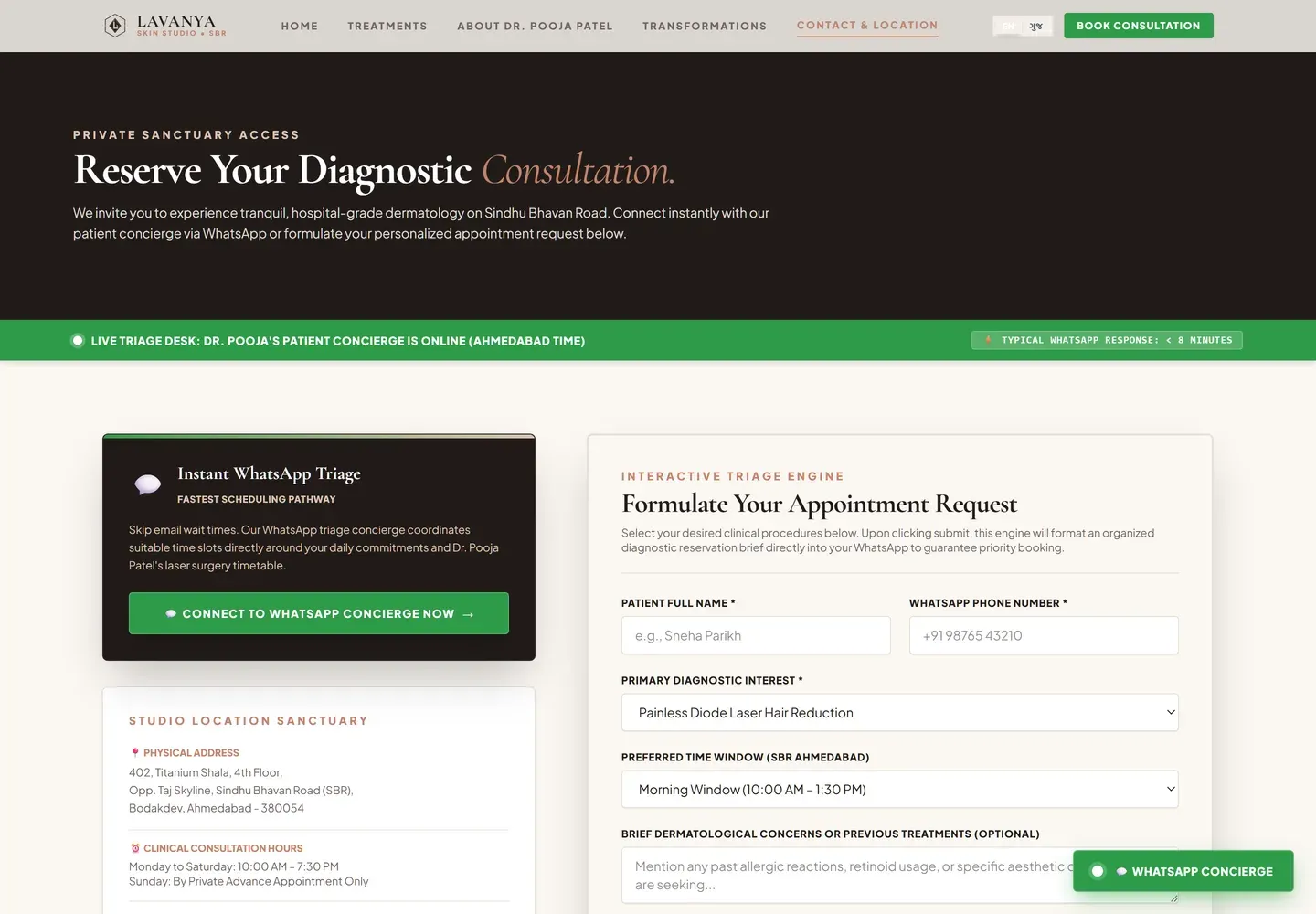
Two ways to enquire, both of them one screen
A WhatsApp button for the patient who wants to ask something now, and a short structured form for the patient who would rather send details than talk. The form composes a WhatsApp message rather than sending an email nobody checks, so an enquiry lands where a front desk will see it.
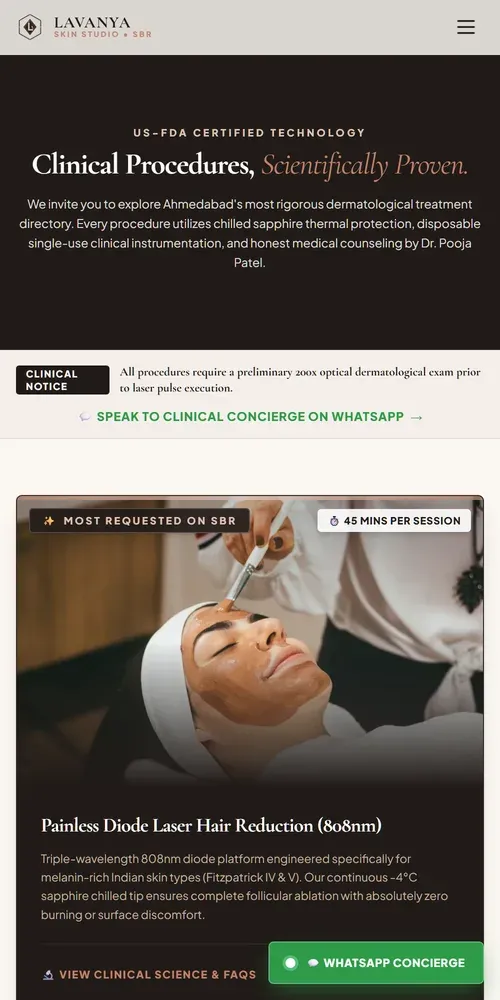
Built for the phone it will be read on
The same treatments page on a mid-range Android over mobile data, which is how nearly every patient will arrive. Cards stack, type stays at a readable size without pinching, and the enquiry button never leaves the screen.